St. Bernard dogs are renowned for their sheer size, gentle nature, and incredible history of rescue work in the Swiss Alps. These giant breed dogs, sometimes called “noble steeds” or “gentle giants,” have captured the hearts of pet parents worldwide. Whether you’re considering adopting a Saint Bernard puppy or simply curious about their size, this guide will walk you through everything you need to know about their growth, temperament, and the care they need.

The Giant Size of St. Bernard Dogs
When discussing St. Bernard dogs, one of the first things that come to mind is their massive size or the Beethoven movie. These giant dogs can weigh between 120 to 180 pounds (54-82 kg) when fully grown. On average a female can weigh 54 – 64 kg, while a male St Bernard can weigh heavier with a range of 64 – 82 kg, with some males reaching even larger weights. The average weight of a St. Bernard falls within this range, and their adult size can be truly awe-inspiring.
The great St. Bernard pass in the Swiss Alps, where these dogs originally worked as rescue dogs, demanded a strong and powerful breed capable of navigating rugged terrain and enduring extreme weather conditions. Their large size wasn’t just for show; it was essential for rescuing people in the snowy wilderness.
Today’s Saint Bernards have inherited that same size, with male counterparts typically being larger than females. The breed standard set by The Royal Kennel Club and The American Kennel Club (AKC) recognises them as a giant dog breed. With the female St Bernards having a height range of 26″-28″ at the shoulder, the males stand taller with a height range of 28″-30″. While their size can be intimidating, their personalities make them a wonderful and loving dog.

A Gentle Giant for the Family
Despite their imposing stature, St. Bernard dogs are known for their gentle and affectionate temperament. They make can make an excellent addition to a family due to their patient and calm demeanor. Many prospective owners are drawn to their ability to bond deeply with all family members, often becoming protective yet loving guard dogs.
However, because of their large size, early socialisation and obedience training are essential for St. Bernards. While they are naturally gentle, training ensures they know how to interact properly with young kids and others. Their lower activity levels compared to other large breeds like German Shepherds or Great Danes also make them a good choice for families who prefer a relaxed environment. However, always remember if you have little children that they are big dogs who sometimes don’t always know their size when choosing where to sit or play.
St. Bernards and Their Rich History
The history of the St. Bernard breed is intertwined with the Great St. Bernard Hospice, where they were bred to assist monks in rescuing travelers stranded in snowstorms. Known as “Barry dogs” after a famous rescue St. Bernard named Barry, these dogs saved countless human lives. The breed itself dates back to the early Alpine Mastiffs and has been a symbol of rescue and service ever since. Even today, many modern Saints are used in rescue operations or serve as therapy dogs, showcasing the breed’s versatility and loving nature.
Common Health Concerns
Due to their size, St. Bernards are prone to certain health conditions. Hip dysplasia and elbow dysplasia are common issues in large dogs, including Saint Bernards. These conditions occur when the hip or elbow joint doesn’t develop properly, causing pain and mobility problems later in life, this usually happens due to their quick growth rate. While treatment options exist, early detection and care are vital.
Another common health concern is heart disease. Like many giant breeds, St. Bernards are at risk for heart problems as they age. Ensuring that they lead a healthy life with the right diet, exercise, and veterinary care is crucial for longevity. Feeding your giant dog breed a high-quality, large-breed puppy food during the first year can help set the stage for healthy growth. It is also vital that you ensure your dog doesn’t exercise straight after a meal while they are digesting as they can be prone to Bloat, sometimes smaller meals throughout the day are a better option.
Coat Care and Grooming
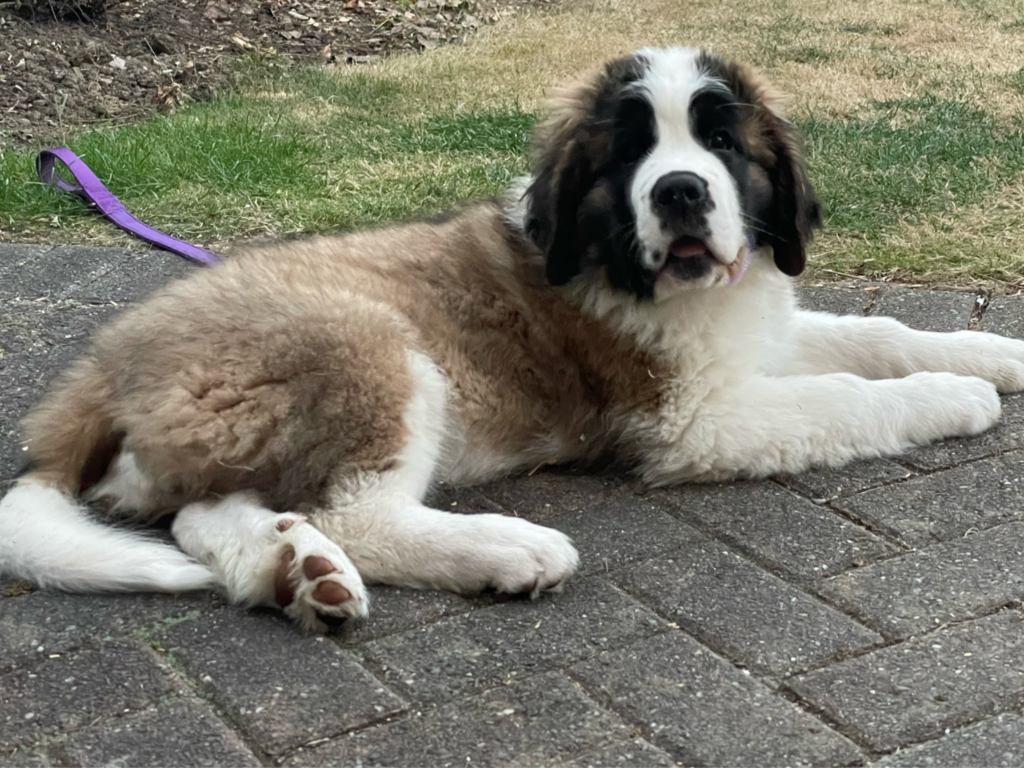
St. Bernards come in two coat types: smooth and rough. Chicago & Cici are both rough coat Saint Bernards. Their thick coats are designed for cold weather, making them well-suited for colder climates but requiring extra care during the summer months. Regular weekly brushing helps maintain their coats, and it’s important to pay attention to their grooming needs to prevent matting and skin issues.
Their longer coat can also shed, so pet parents should be prepared for some fur cleanup around the house. However, the good news is that with proper grooming and care, their coats can remain healthy and manageable.
Caring for Your Saint Bernard
Owning a Saint Bernard requires a commitment to their well-being. Because of their size, adoption costs can be higher than for smaller breeds, and they need great care in their daily lives. From feeding the right food to maintaining an insurance policy for potential health issues, it’s essential to be prepared for the costs and responsibilities of owning a giant dog.
Finding a reputable breeder or considering adoption from a rescue dog organisation can ensure that your Saint Bernard comes from a healthy lineage. Proper care and attention can help these biggest dogs lead a happy, healthy life.
Is a Saint Bernard Right for You?
The Saint Bernard dog breed is a great option for families looking for a wonderful family dog that’s gentle, loyal, and protective. Their large size may be overwhelming at first, but their loving nature makes them excellent companions. It might be best to get one when your kids are a little older though so that they understand the care that needs to go into looking after a giant breed.
They are particularly suited for colder climates and families that enjoy spending time outdoors, as their thick coats and love for long walks keep them comfortable in cold temperatures. However, during the summer months, it’s important to provide them with cool spaces to prevent overheating.
If you’re thinking about adopting a Saint Bernard, consider their needs for space, early training, and the potential for health problems such as hip dysplasia. With the right care and attention, these gentle giants will become beloved your best friend and loyal companions for years to come.
In short, St. Bernards are not just big dogs – they are gentle giants, rescue dogs, and the best friends any family could ask for.
Other Posts
- A Guide To The Best Food For Your St Bernard
- Get To Know The Growth Of a Saint Bernard Puppy
- A Guide To The Best Toys For Giant Breed Dogs
